UII Industrial Engineering Practitioner Lecture: Kaizen and Layout Optimization Practical Industrial Engineering Approach
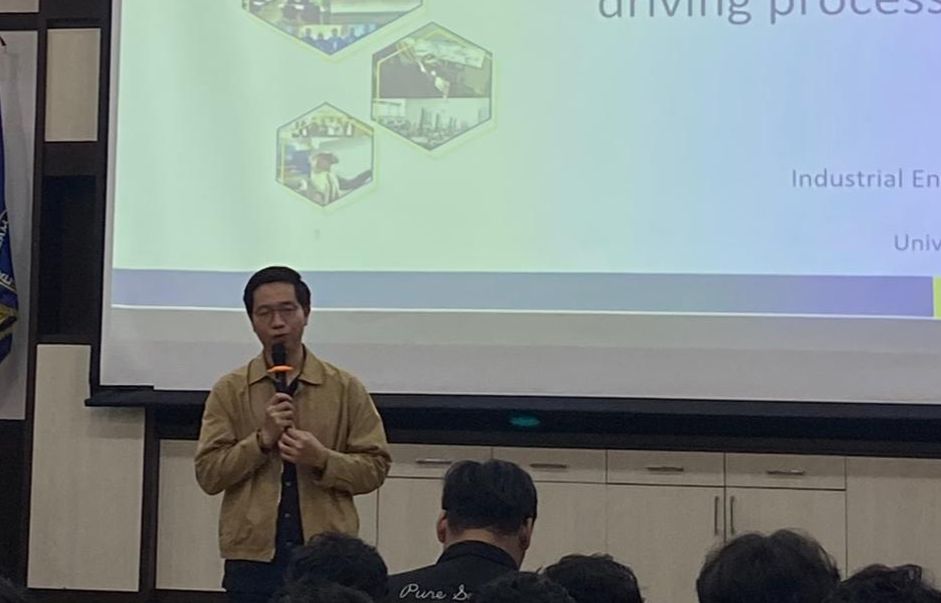
The Industrial Engineering Study Program, Faculty of Industrial Technology (FTI), Islamic University of Indonesia (UII) held a practitioner lecture for the Facility Design course. The event raised the topic of “Kaizen and Layout Optimization: Practical Industrial Engineering Approach” and took place offline on Saturday (12/20). This practitioner lecture was held in two sessions, from 9:00 a.m. to 12:00 p.m. and from 1:00 p.m. to 4:00 p.m. at the FTI Auditorium on the 3rd floor. The lecture aimed to provide participants with an understanding of best practices in the application of Kaizen and layout optimization.
Rahmalia Yunita, as the Master of Ceremony, opened the event on time for both sessions. Rahmalia then continued the event by introducing the speaker for the practitioner lecture, Ori Rabowo. He is the Senior Operational Excellence Manager at Kimberly-Clark and has in-depth knowledge of Kaizen and Layout Optimization.
Local Improvements Affecting System Complexity
Ori opened the presentation session by emphasizing that improvements in the world of Industrial Engineering cannot be made partially or focused on a single process. In the context of Kaizen and layout optimization, he explained that every improvement decision must be viewed holistically. This is because industrial systems are interconnected between processes, capacity, layout, and demand. Local improvements that are not supported by end-to-end analysis have the potential to create new problems in the system.
Ori also cited a case study of reducing the number of machines as a form of operational efficiency. Locally, this decision was considered appropriate because it increased machine utilization and reduced costs. However, there was a side effect of pressure on human resources. This was because the data had not been standardized and the demand analysis had not been carried out thoroughly.
“This means that three machines will be discarded or sold. It turns out that the data mining is not yet standardized. This month, demand has increased, but the number of machines has been reduced and the number of employees has also been cut. This has led to an overwhelming workload. The result? We actually need additional overtime,” he explained.
This example shows that process optimization focused solely on local efficiency can pose risks in other areas, such as increased workloads and overtime. Ori emphasized that Kaizen and Layout Optimization are not just about making improvements, but ensuring that those improvements align with the overall process flow, supply chain, and system requirements.
Case Study Discussion
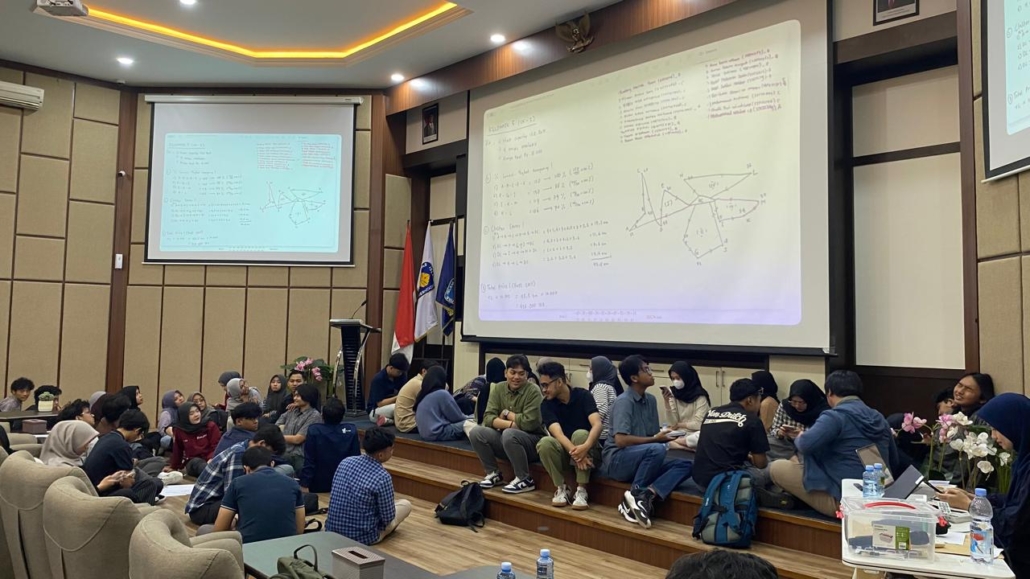
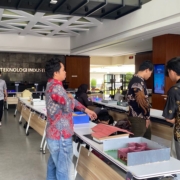
After the presentation, participants were divided into large groups to solve two case studies. The first case study discussed the optimization of the Global Print Solution Indonesia factory layout. Participants analyzed the Operation Process Chart (OPC) and redesigned the production layout using the Activity Relationship Chart (ARC). The second case study focused on the optimization of PT. Cetak Kreatif’s distribution. Participants calculated the occupancy rate, clustering stores, and transportation costs with a specific truck capacity. Each group member worked together to identify problems and find solutions according to their techniques.
After all groups finished, each group presented their results and solutions. These presentations included various perspectives because each group had a different approach. This allowed participants to learn from various optimization methods. This session enriched participants’ understanding of the real-world application of Kaizen and layout optimization in industry.
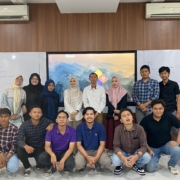
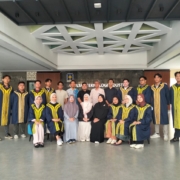
Thus, this practitioner lecture provides unique knowledge for UII Industrial Engineering students. Participants not only understand the theory but also integrate and apply it to industrial cases. The practitioner lecture event concluded with a group photo session with the speakers and all participants, with the hope that the knowledge gained can be applied in their academic or professional careers.
Nisrina Nur Masrefa