From Campus to the International Stage: Arro’uf Wins 3rd Place at ISS 2025
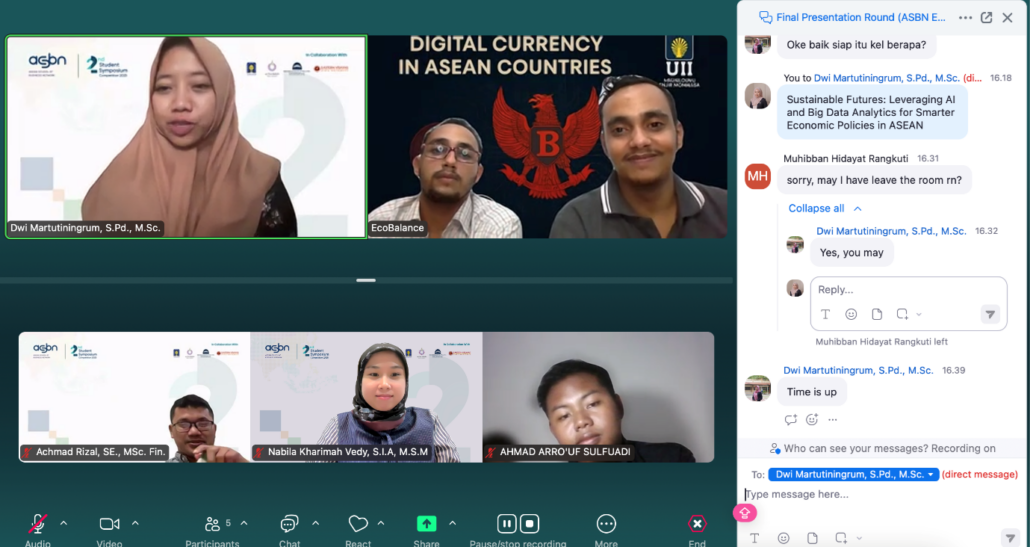
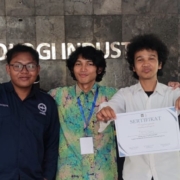
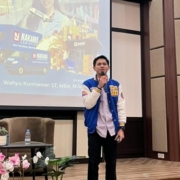
Ahmad Arro’uf Sulfuadi, a student in the Industrial Engineering Program at the Faculty of Industrial Technology (FTI), Universitas Islam Indonesia (UII), won 3rd place at the International Student Symposium 2025. This competition will be organized by the ASEAN School of Business Network (ASBN) in August 2025. Arro’uf competed in the essay category under the sub-theme “Green Economy and AI: Opportunities and Challenges.” Arro’uf presented an idea regarding the integration of AI in the management of renewable energy on an ASEAN regional scale. He adopted a benchmarking approach based on the ASEAN Power Grid initiative proposed by the ASEAN Center for Energy (ACE). He also outlined how the integration of AI can more efficiently bridge cross-border boundaries. This achievement demonstrates that UII Industrial Engineering students are capable of contributing to discussions on global issues at the international level.
From In-Depth Research to the International Finals
The competition consists of two stages: the preliminary round and the finals. Participants come from various countries at the international level. Since the competition is individual, Arro’uf handled the entire process on his own, proceeding at a slow and measured pace. Throughout the process, he positioned himself as a policy consultant. He presented real-world data on the potential for renewable energy in each of the pioneering ASEAN nations. He also designed an automated energy exchange system powered by AI authorized by the APC.
Arro’uf delved into the topic through a literature review on the application of AI in macro-scale energy management. He also watched various podcasts and videos on how AI is used in corporate-level energy management. From there, he began to consider whether this technology could be developed for use on a broader scale.
Arro’uf’s biggest challenge in this competition was presenting an innovative yet rational idea. He had to balance the potential for AI implementation in energy exchange with the reality of policy resistance and varying levels of openness in each country. Through his persistence, Arro’uf became a finalist among 10 international participants and secured 3rd place.
Essays as a Space for Sharing and Exchanging Ideas
In the final round, Arro’uf had the opportunity to witness interesting ideas from participants from other countries. A Vietnamese participant discussed Mekong River economic routes, while a Thai participant explored electric trains as sustainable transport. This experience broadened his perspective, showing him that this issue can be approached from diverse viewpoints in each country.
Arro’uf views this achievement as a highly valuable experience, especially since he had initially doubted his own idea in the early stages. He encourages other students not to hesitate to express their ideas through essays. Arro’uf sees the essay as a flexible medium because it allows anyone to explore ideas as broadly as possible, provided they are supported by real and rational data.
“So, in my opinion, an essay is a great platform to voice your ideas!” said Arro’uf.
Arro’uf also emphasized that ideas that seem too unrealistic to implement might actually be needed by those who already have the capacity to make them happen. Arro’uf proves that presenting big ideas can help Indonesian students make an impact on the international stage.
Nisrina Nur Masrefa