Give Your Best, Leave the Rest to Allah

The academic world is always tied to grades, GPAs, rankings, scholarships, competitions, and the pressure to always be the best. This causes many students to live in a state of near-constant anxiety. Ambition fuels the drive to keep striving, but if taken too far, it can become a burden on the soul. Amid these pressures, tawakal can serve as a guiding principle, allowing individuals to keep striving without becoming consumed by anxiety over the outcome.
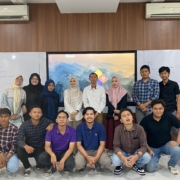
Islam itself never forbids anyone from being ambitious, excelling, and achieving. However, ambition must be kept in its proper place such as ambitious students in the Industrial Engineering program at UII. One must continue to pursue goals earnestly, yet leave the final outcome to Allah. This balance is known as the harmony between ikhtiar (effort) and tawakal (surrender). These two aspects must be inseparable.
Maximum Effort: A Command, Not an Option
Tawakal does not mean simply surrendering without clear effort, leading to laziness. True tawakal is always preceded by sincere effort. In a hadith narrated by Anas bin Malik, a companion asked the Prophet Muhammad (peace be upon him) whether he could simply let his camel go while placing his trust in Allah. The Prophet (peace be upon him) said:
حَدَّثَنَا أَبُو حَفْصٍ، عَمْرُو بْنُ عَلِيٍّ حَدَّثَنَا يَحْيَى بْنُ سَعِيدٍ الْقَطَّانُ، حَدَّثَنَا الْمُغِيرَةُ بْنُ أَبِي قُرَّةَ السَّدُوسِيُّ، قَالَ سَمِعْتُ أَنَسَ بْنَ مَالِكٍ، يَقُولُ قَالَ رَجُلٌ يَا رَسُولَ اللَّهِ أَعْقِلُهَا وَأَتَوَكَّلُ أَوْ أُطْلِقُهَا وَأَتَوَكَّلُ قَالَ ” اعْقِلْهَا وَتَوَكَّلْ ” . قَالَ عَمْرُو بْنُ عَلِيٍّ قَالَ يَحْيَى وَهَذَا عِنْدِي حَدِيثٌ مُنْكَرٌ . قَالَ أَبُو عِيسَى وَهَذَا حَدِيثٌ غَرِيبٌ مِنْ حَدِيثِ أَنَسٍ لاَ نَعْرِفُهُ إِلاَّ مِنْ هَذَا الْوَجْهِ وَقَدْ رُوِيَ عَنْ عَمْرِو بْنِ أُمَيَّةَ الضَّمْرِيِّ عَنِ النَّبِيِّ ﷺ نَحْوُ هَذَا
“Anas ibn Malik narrated that a man said, ‘O Messenger of Allah! Should I tie it and put my trust in Allah, or leave it loose and put my trust in Allah?” He replied, “Tie it and put your trust in Allah.” (Narrated by al-Tirmidhi, no. 2517)
This hadith serves as an important foundation establishing that tawakkul without effort is not true tawakkul, but rather a misplaced form of resignation. Allah also emphasizes in the Qur’an that the results of one’s efforts do not come on their own, but rather through a process that requires struggle:
وَاَنْ لَّيْسَ لِلْاِنْسَانِ اِلَّا مَا سَعٰىۙ
“That man shall only reap what he has sown” (Quran 53:39)
For a college student, this verse can serve as both a reminder and a source of motivation. Studying diligently, completing assignments carefully, managing time effectively, and continually striving to improve are not just about achieving good results—they are also acts of worship. This is because Allah looks at a person’s effort and sincerity, not just the final outcome.
Tawakal: Do Your Best, Then Leave the Outcome to Allah
The most challenging moment for many students is when they’ve given their all, yet the results fall short of expectations. It is precisely at this point that the true meaning of tawakal is put to the test. Tawakal does not mean giving up before even trying; rather, it means entrusting the final outcome to Allah after having made a sincere effort. Allah says:
فَاِذَا عَزَمْتَ فَتَوَكَّلْ عَلَى اللّٰهِۗ اِنَّ اللّٰهَ يُحِبُّ الْمُتَوَكِّلِيْنَ ١٥٩ …..
“Then, when you have made up your mind, put your trust in Allah. Indeed, Allah loves those who put their trust in Him.” (Quran 3:159)
The peace of mind that comes from tawakal enables a believer to strive with greater composure, unburdened by excessive fear of failure. This aligns with the findings of a study by (Supriadin et al., 2024), which showed that 84.2% of respondents understood tawakal as a combination of effort and surrender to Allah. Meanwhile, 52.6% of respondents believed that tawakal can help reduce stress and foster solidarity. Thus, tawakal teaches that one must continue to do one’s best, but not allow the outcome to become a source of anxiety, as the final result is part of Allah’s will.
Guarding the Heart Through Ikhtiar and Tawakal
In the academic world, there are two extreme attitudes that must be avoided. Placing excessive hope in Allah’s help without accompanying it with effort can make a person passive and reluctant to strive. Conversely, being too afraid of failure can cause a person to feel constantly anxious and dwell excessively on the outcome. Therefore, a balance is needed between ikhtiar and tawakal. That is, striving earnestly without being overly dependent on the outcome, and then entrusting the final result to Allah.
The Prophet Muhammad (peace be upon him) taught a beautiful middle path through a meaningful prayer:
اللَّهُمَّ لاَ سَهْلَ إِلاَّ مَا جَعَلْتَهُ سَهْلاً وَأَنْتَ تَجْعَلُ الحَزْنَ إِذَا شِئْتَ سَهْلاً
“O Allah, there is no ease except that which You make easy. And You make sorrow (difficulty) if You will it, it will surely become easy.” (Narrated by Ibn Hibban)
This prayer teaches that human effort is merely a means, while true ease comes from Allah. A student who understands this will continue to strive wholeheartedly in their studies, pursue achievements, and improve themselves, yet will not lose heart when the results do not go as planned. This is because they are certain that Allah never wastes the efforts of His servants, whether the results are immediately apparent or not.
Chasing Dreams with a Peaceful Heart
Balancing ambition and tawakal does not mean reducing one’s efforts, but rather learning to accept that results do not always align with expectations. A student must still study diligently because all of that is part of their effort and responsibility. After doing their very best, the final outcome is entrusted to Allah with a calm and open heart.
With this attitude, a student can continue to pursue their aspirations and give their best effort without worrying too much about the results.
Nisrina Nur Masrefa
REFERENCE
Supriadin, I., Abubakar, A., & Arsyad, A. (2024). DISKURSUS TEOLOGI QADARIYAH DAN JABARIYAH : TAWAKAL DALAM TINJAUAN FILOSOFIS DAN SURVEY. Jurnal Studi Islam, 5(2).