Preserving the Values of Pancasila Among Industrial Engineering Students at UII
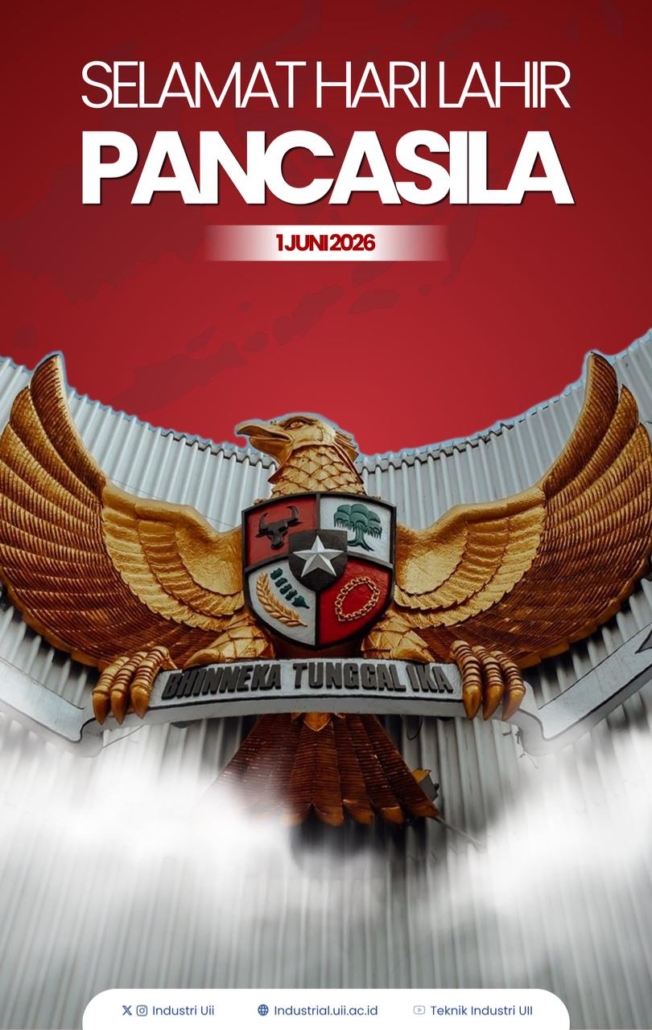
For the academic community of Industrial Engineering at Universitas Islam Indonesia, Pancasila is far from a mere theory remembered only during its birth anniversary on June 1st. Instead, this historic moment reminds students to consistently implement Pancasila values in their daily activities. UII has a strong connection to the nation’s foundation. The university’s founding fathers helped formulate Pancasila.
At the Sleman Integrated Campus, the university integrates Islamic and Indonesian values throughout the learning process. Consequently, the campus community preserves this historical momentum not as a repetitive annual routine. Furthermore, Pancasila stands as a moral compass for Industrial Engineering students and the wider Faculty of Industrial Technology (FTI) family in navigating global challenges. In today’s digital era, managing information on social media has become a major challenge. Therefore, digital communication ethics are increasingly important.
Pancasila Values Among Industrial Engineering Students at UII
Students apply Pancasila values through ethical digital communication in cyberspace. Industrial Engineering students understand system design and data governance. As a result, they verify information before sharing news.
Moreover, the Ulil Albab character encourages students to express opinions politely, rationally, and based on facts. They use this filtering process to reduce hate speech, hoaxes, and digital provocations. Consequently, they help prevent social conflicts. This commitment to Pancasila helps curb misinformation. In addition, it also supports social stability and national unity.
How Industrial Engineering Students at UII Promote Unity Through Diversity
Meanwhile, students apply Pancasila values through collaboration and teamwork. This is evident within the learning ecosystem and daily social interactions on campus. Domestic migrant students from various corners of the archipelago and international students blend together seamlessly. They gather without regard for differences in ethnicity, race, or cultural background.
Jihan, an Industrial Engineering student from Riau, shared her perspective on the social dynamics on campus.
“As a student from outside the region, I feel well received in the campus environment. Students do not let regional differences hinder friendship or collaboration, allowing me to adapt comfortably and grow alongside my peers,” she said.
Echoing this sentiment, Yaser, an international student from Yemen in the International Program (IP) of Industrial Engineering at UII, also experienced this inclusive atmosphere firsthand. Both lecturers and fellow students treat him equally without discrimination within the campus environment as a reflection of Pancasila’s tolerance.
“Although I sometimes still find social situations a bit challenging due to language barriers, overall, I really enjoy my learning experience here because everyone is very open and supportive,” Yaser expressed.
Through this mutually supportive campus atmosphere, the faculty has successfully created a comfortable learning environment for everyone. Differences in regional and national origins actually make friendships within FTI UII even more harmonious.
Kaila Bilbina M.S