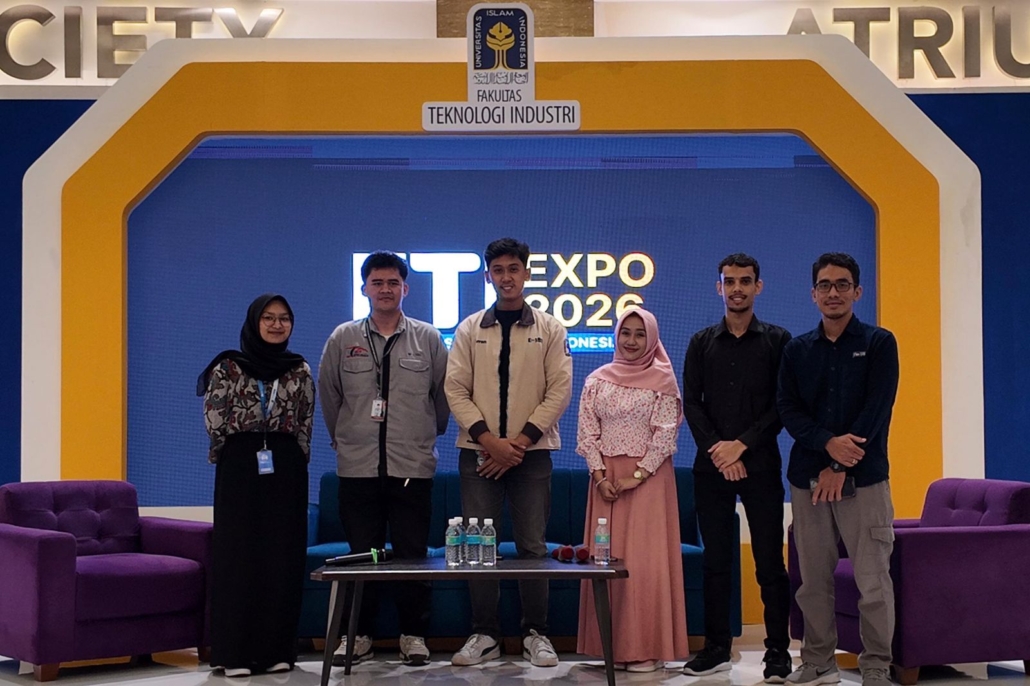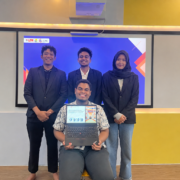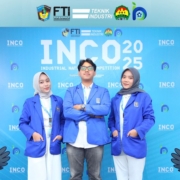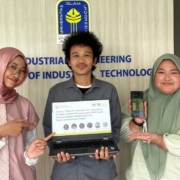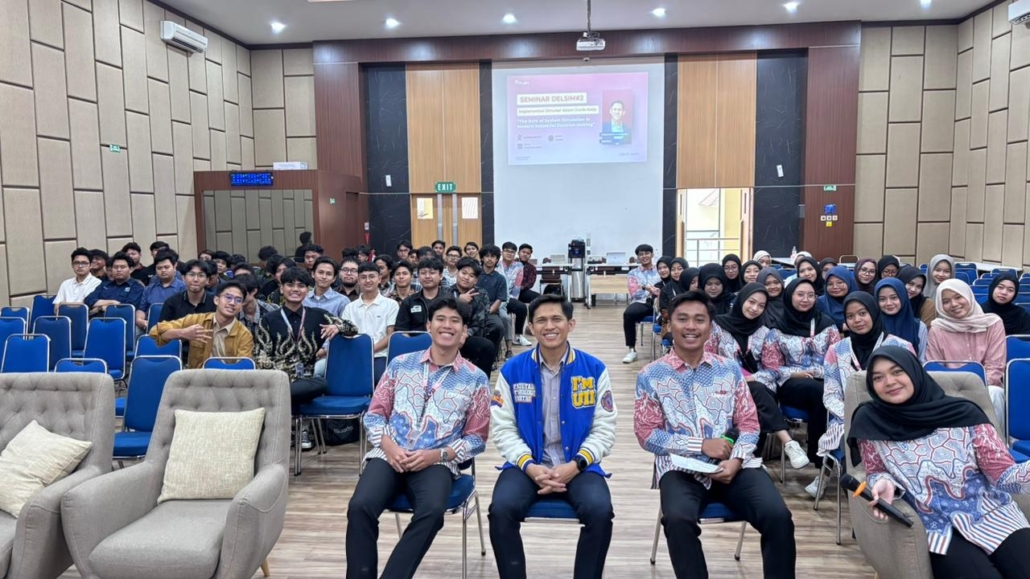
The Industrial Modeling and Simulation Laboratory (DELSIM), Industrial Engineering, Faculty of Industrial Technology (FTI), Islamic University of Indonesia (UII) held Seminar #2 offline on Friday (05/12) with the topic “The Role of System Simulation in Modern Industrial Decision-Making”. A total of 62 participants attended this event. This event aimed to provide insight to students and participants regarding the application of system simulation to solve complex industrial problems and support strategic decision-making in companies.

Demas Rakha Freeporta and Bintang Nairah Yuan served as the Master of Ceremony (MC) and opened the seminar at 08.00 WIB. After the opening, the two MCs led the participants in singing the Indonesian national anthem, Indonesia Raya, and the UII anthem. Daffa Allamsyah delivered a speech as the DELSIM Lab Assistant Coordinator. Next, Didin Dwi Novianto, S.T., M.LSCM., delivered a speech as a representative of UII lecturers. Before entering the material session, the MC introduced Amanda Trixie Alsyaviar as the seminar moderator.

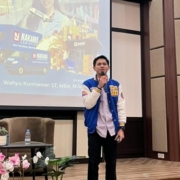
Amanda then introduced the speaker for this seminar, Wahyu Kurniawan, S.T., MBA., M.Sc., CISCP. Wahyu actively teaches at Jenderal Achmad Yani University in Yogyakarta and has nearly ten years of experience in an industry with a CAGR growth rate of approximately 78.9% between 2016 and 2020. This professional experience has shaped his expertise in logistics and supply chain management, business development, financial analysis, feasibility studies, and business and financial reporting.

When and Why Choose Simulation?

Wahyu opened the presentation by explaining the importance of selecting the right timing for using simulation to solve industrial problems. He emphasized that not all problems require simulation therefore, the chosen method must match the problem’s complexity. In operations research, there are three levels of methods. First, exact methods such as the simplex method address well-structured problems. Second, probabilistic methods or metaheuristics handle problems with moderate complexity. Finally, simulation supports problems with high levels of complexity and uncertainty.

“There is a hierarchy in which a problem can be solved by various approaches. Simulation is used when we are dealing with complex problems,” he said.

Wahyu continued by providing several criteria for recognizing complex problems, such as high data variability and the number of variables in a system. To clarify this point, Wahyu presented a project he is currently conducting. The project involved transporting sludge waste from 451 oil drilling wells with unstable production levels. Through this example, Wahyu showed the fluctuating data variation and the large number of transportation points prevented effective mathematical modeling, so researchers used simulation to solve the problem.

Interactive Discussion Session

During the discussion session, participants actively discussed how industries apply simulation and how transportation cost uncertainty influences decision making. They raised issues about production scheduling instability in the beverage industry and compared alternative solutions. Participants also asked researchers to clarify model validation in job shop studies and to explain methods for identifying root causes, setting priorities, and choosing effective problem-solving strategies.

To clarify this, Wahyu explained that shipping line simulation offers a flexible approach to evaluating transportation uncertainty across various operational scenarios. Furthermore, he addressed job shop research by describing makespan as an optimization parameter in metaheuristics. In addition, Wahyu emphasized the need to retest optimization results through simulation to ensure real world effectiveness. Finally, he highlighted the importance of identifying root causes before determining improvement alternatives.

In conclusion, this discussion session emphasized the role of simulation beyond mere technical analysis. Simulation helps to understand the overall behavior of systems in complex and uncertain conditions. Participants showed great enthusiasm during the discussion session. These insights encouraged participants to continue developing their analytical skills and utilizing simulation in more accurate and efficient decision making.

Nisrina Nur Masrefa

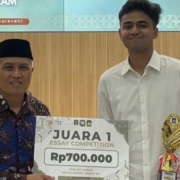
Mahasiswa Industri Raih Juara 1 di LEVITASI FTI UII dengan inovasi Food Waste

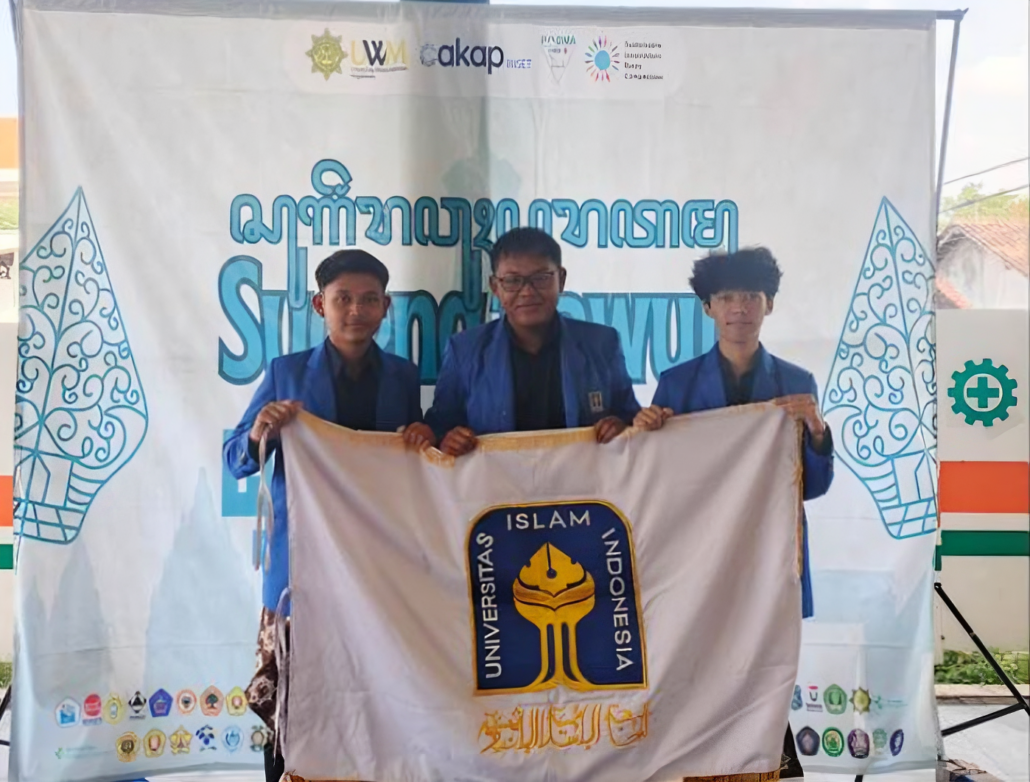
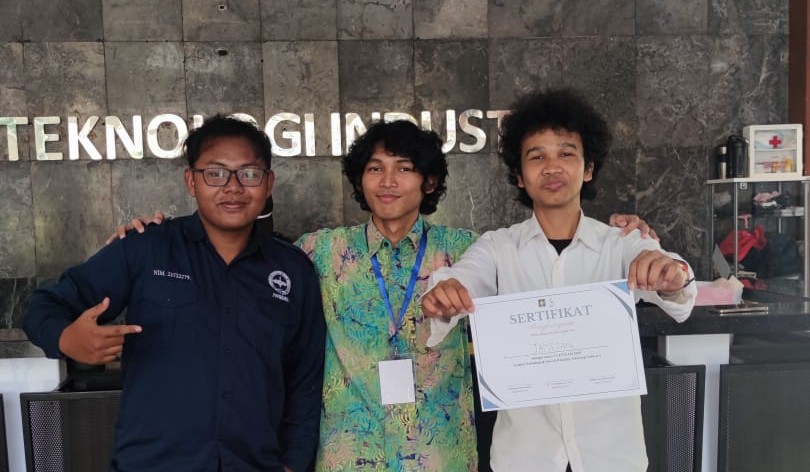
Another proud achievement comes from the Industrial Engineering students of the Faculty of Industrial Technology, Universitas Islam Indonesia (UII). This time, a team of Industrial Engineering students successfully secured 1st place at LEVITASI FTI UII 2025 (Technology and Innovation Competition), which was organized by the Student Executive Board of FTI UII. Through this achievement, the students once again demonstrated their excellence in innovation and technology.

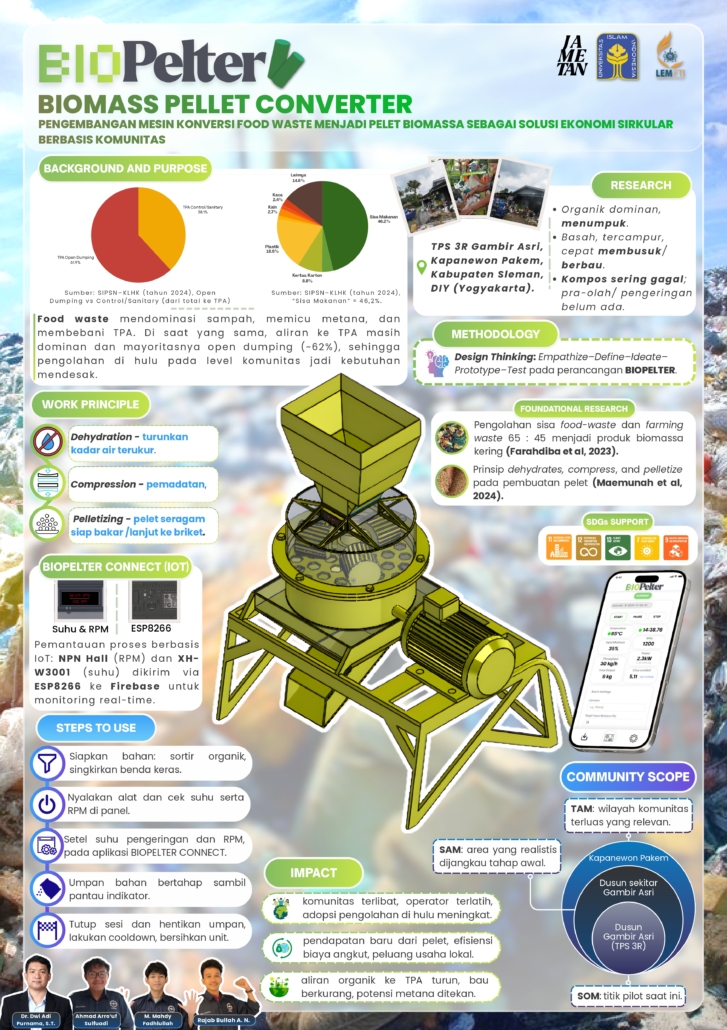
BIOPELTER: Biomass Pellet Converter

BIOPELTER: merupakan alat yang mampu mengubah food waste menjadi pelet dengan nilai jual tinggi

Under the sub-theme Circular Economy & Waste Management, the three-member team introduced an innovation called BIOPELTER: a machine designed to convert food waste into biomass pellets that can be used as animal feed.

The idea was driven by data showing that food waste dominates national waste generation. Seeing this, the team identified a major gap in the current organic waste management system that has yet to be properly addressed.

“So far, food waste is often just left unused or even burned. Through this innovation, we want to give food waste a second life by turning it into pellet material that can be sold by waste banks,” explained Arrouf, one of the team members.

According to the team, BIOPELTER was designed not only to improve food waste processing but also to create economic value for the community.

The Journey Behind BIOPELTER

Arrouf also shared the story behind the development process. He revealed that the competition journey was filled with technical challenges that pushed the team to constantly learn and adapt.

“We had to adjust and learn many technical aspects of the innovation we were building. But we managed to get through it all with consistency, perseverance, and strong teamwork,” said Arrouf.

The team applied the Agile Method approach throughout the project, which helped them continuously refine the product. During the process, they also received guidance from Dr. Dwi Adi Purnama, S.T., a lecturer in Industrial Engineering at UII, who served as their supervising mentor.

Hopes and Messages

Mahasiswa Industri Raih Juara 1 di LEVITASI FTI UII dengan inovasi Food Waste

For the team, this win is not the final destination, but a starting point for something bigger. The long journey taught them the importance of empathy, courage, and believing in their own ideas.

“At first, some people doubted this idea. But if we don’t believe in the product we’re developing, then who will?” Arrouf shared.

Closing their journey at LEVITASI FTI UII 2025, the team encouraged other students not to hesitate in joining competitions and creating innovations.

“Empathize deeply with the problem. Don’t let your solution become just a ‘mixed’ product without clear direction. Make sure it truly fits the problem and the target market. Do it with full dedication.”

This achievement proves that innovation built on empathy and courage can take UII Industrial Engineering students further. Not only in competitions, but also in addressing real issues faced by society.

Syawarani Gayatri

UII Industrial Engineering students once again made proud achievements in the “X Congress & National Seminar of the Indonesian Ergonomics Association (PEI) 2024”. The event took place on (8-10/8) at Universitas Katolik Parahyangan, Bandung.

Muhammad Alif Basyariah, a representative of UII Industrial Engineering who is an assistant of the Work System Design and Ergonomics Laboratory (DSKE), presented a paper entitled “Ergonomic Car Seat Design with AI Integration”. The research raised innovative solutions in creating ergonomic car seat designs by utilizing artificial intelligence (AI) technology, in order to increase the comfort and convenience of drivers in driving. This paper is a development of posters and essays that were successfully presented at the Ergo Camp event.

Alif shared the process he went through, from drafting the paper, preparing the journal for publication, to doing various presentation exercises. This research is the result of collaboration with the Big Project team, which consists of Alif’s colleagues, Hadi Ramadhan, Aji Adianta Firjatullah, and Reyhandi Rachmad Fadila Wicaksono. Not only that, Alif was also under the guidance of Chancard Basumerda, a lecturer in UII Industrial Engineering in the field of Ergonomics. 

“I am proud. Because it is also the first time to be the representative for the National Ergonomics Conference too. Then meet great people too. Leading lecturers at major universities, as well as ergonomics experts. So I got a lot of valuable insight,” said Alif.

He also gave a message of encouragement to other students. “Grow a sense of curiosity and a sense of wanting to achieve something. So how can you get something from that feeling.  Well, then, how do you prepare for it. Continue to be balanced with good time management anyway, because one of the factors may be that it is difficult for students now.”

This achievement is proof of the contribution of UII Industrial Engineering students in the development of ergonomics and technology. Hopefully this achievement will inspire other students to continue working and make the university proud in the national and international levels.

Salwa Nur Rahma

On Thursday (10/10) the Department of Industrial Engineering, Faculty of Industrial Technology, Universitas Islam Indonesia  collaborated with PT Yamaha Indonesia in an industrial internship program. This collaboration began with a seminar that presented two main speakers, namely Muhammad Isnaini from the HRD Manager of PT Yamaha Indonesia and M. Syahfatahillah from the Production Engineering Manager of PT Yamaha Indonesia.

The seminar took place at the 3rd floor Auditorium of K.H. Mas Mansur Building and started at 13.30 WIB. Wahyudhi Sutrisno, S.T., M.M., M.T acted as the host, while Yuli Agusti Rochman, S.T., M.Eng. gave the opening remarks. In his speech, Yuli Agusti Rochman expressed his appreciation to Yamaha. “Congratulations for this afternoon’s study. Once again, we would like to thank Yamaha for attending this afternoon and sharing with all of us,” he said.

After the speech, Muhammad Isnaini opened the public lecture session. He explained his career journey which began in Japan until in 2021 he decided to return to Indonesia to join the HRD of PT Yamaha Indonesia. In his current position, Isnaini continues to learn to understand various aspects related to human resources and the rules of the internship program at PT Yamaha Indonesia.

Muhammad Isnaini also explained that the internship program at PT Yamaha Indonesia has been running for eight years and has now reached its 18th batch. This program was first initiated by the previous HRD manager, Pak Kausar. However, Isnaini admits that the internship duration of only three months is often not enough to provide adequate industrial experience and competence for students. In addition, the company also felt that short internships could disrupt industrial activities.

Therefore, through the MOU cooperation between UII and PT Yamaha Indonesia, the duration of the internship program was extended to six months. This extension is expected to provide more in-depth experience for students and reduce disruption to industrial activities. This internship program can also be converted into semester credit units (SKS), so that students not only gain industrial experience but can also fulfill academic requirements. In addition, Isnaini highlighted that the internship at PT Yamaha focuses not only on developing hard skills, such as technical understanding and industrial practices, but also on soft skills, including communication skills, teamwork, and leadership.

The seminar was closed with an interactive Q&A session, where students discussed further about the internship program and career opportunities at PT Yamaha Indonesia. The speakers answered various questions enthusiastically, providing comprehensive explanations and motivation for the participants. After the Q&A session, the event ended with a group photo between the speakers, lecturers, and students, creating a warm moment of togetherness to conclude the event.

Rani Novalentina

Serah Terima Mahasiswa Magang Batch XIX

On Monday (02/09), students of Industrial Engineering Study Program of Faculty of Industrial Technology (FIT) Universitas Islam Indonesia (UII) attended the handover ceremony of internship students at PT Yamaha Indonesia office. This internship program is part of the cooperation between PT Yamaha Indonesia and the Industrial Engineering Study Program of FTI UII, which has long been established. Through this cooperation, students who pass the partnership internship selection can join the program. In the XIX batch, Industrial Engineering Study Program FTI UII sent seven students for internship.

The handover ceremony was accompanied by several lecturers of Industrial Engineering Study Program FTI UII, namely Wahyudhi Sutrisno, S.T., M.M., M.T., Ir. Muchamad Sugarindra, S.T., M.T.I., IPM, and Elanjati Worldailmi, S.T., M.Sc. In addition, Department Secretary Dr. Taufiq Immawan, S.T., M.M. was also present and gave a speech. In his speech, Dr. Taufiq conveyed a message for the students to remain enthusiastic and maximize their potential during their internship at PT Yamaha Indonesia. This message is in line with the expectations of Vice President of PT Yamaha Indonesia, Samsudin, who also emphasized the importance of maintaining enthusiasm and health during the internship program.

Meanwhile, Audiamara Vinka expressed her hope as one of the interns “I hope that by participating in the internship, I can open my eyes to how the world of work works and can make a good contribution to the company with my abilities” she said.

Completion of The XVIII Batch Internship Program

This handover also marks the completion of the XVIII batch internship program which has lasted for six months. This is at the same time to carry out the Awareness Program at the company. The students who have completed the internship are expected to be able to develop their skills based on the experience gained during this program. In addition, this partnership internship program is expected to support the industry’s need for competent workers in their fields.

Zahra Nasywari Firdantara, one of the internship students at PT Yamaha Indonesia, revealed that the internship at the company was very valuable because it provided a deep understanding of the application of industrial knowledge in the field. In the Production Engineering division, Zahra applied the concept of Value Stream Mapping (VSM) to analyze inventory, lead time, line balancing, defect goods, study time, and work sampling in order to identify waste and increase productivity with the improvement method (kaizen). 

He added that the projects undertaken during the internship can also be used as material for Practical Work (KP) and Final Project (TA). “So, we don’t have to bother looking for data anymore because everything is in line with the internship project,” he added. “Internship at Yamaha is really worth it, because we understand more about industrial science. If in lectures we only know the material, here we can understand the material as well as its application in the field,” said Zahra. 

She also emphasized the importance of patience and communication to explain the concept and work together on repair projects. Her experience shows the importance of preparation, knowledge and interpersonal skills to maximize internship opportunities and develop yourself in the industry.

Rani Novalentina

Nada Putri Fauziyah, a student of Industrial Engineering at Universitas Islam Indonesia (TI UII), won the Best Student Paper award at the International Conference on Green Technology and Sustainable Development (GTSD) 2024 by HCMC University of Technology and Education as the organizer on July 25-26, 2024 in Thu Duc City, Ho Chi Minh City, Vietnam. In this prestigious conference, Nada compiled a paper with other friends, Mutia Putri Gaisani, Prita Nurkhalisa, and Roaida Yanti with the title “Understanding Consumer Behavior and Market Segmentation using Non-Hierarchical Clustering Method: A Case Study of Café Culturehead in Yogyakarta” which raised the theme of Data Management and Machine Learning, one of the 35 themes available at the conference.

Nada’s Preparation

To prepare her presentation, Nada took about two months. “I started compiling and submitting papers since May and in June I received an acceptance notification for the opportunity to present at HCMC University of Technology and Education,” said Nada. There were two modes of presentation, offline on July 25 and online on July 26. She chose to present offline on July 25 and managed to bring home the Best Student Paper award on the same night.

Preparing for the conference was not easy. “Because I really want to participate in competitions or activities that are international, I tried to ask Mr. Qurtubi who is one of UII’s IT lecturers. There I was given several choices of international conferences, and fell on the choice of GTSD 2024. Then, Mutia and Prita and I wrote the paper together,” she said. After going through various obstacles, Nada received support from friends, family, and alumni, including Yanti as a 2019 Industrial Engineering alumni who became the fourth co-author and accompanied her to Vietnam.

Best Student Paper

Nada’s Message to Other Students

Then, Nada also gave a message to other students who wanted to take part in a similar competition. “Opportunities don’t come twice. If given the time and ability to follow and try new experiences, why not? Never be afraid to try and totality without limits to make UII proud from the Industrial Engineering Study Program,” she said. He also emphasized the importance of not feeling inferior to one’s abilities and to always try to achieve dreams. Nada Putri Fauziyah has brought the good name of UII and Industrial Engineering study program to the international arena. This proves that Indonesian students are able to compete at the global level.

Rani Novalentina

International Program of Department Industrial Engineering Study Program again held a Summer Course 2024 with the theme “Unlock Your Market Potential: Mastering Competitive Innovation With TRIZ”. The activity in order to develop practical experience about industry and culture, especially in Yogyakarta was held on (3/8) through the Zoom Meeting platform. MC, Rona Sutra Dewangga Dyah Utami, led the event which had various benefits, followed by the reading of the divine word by Yudhistira Alfarizi. The Vice Dean for Resources of FTI UII, Dr. Agus Mansur, S.T., M.Eng.Sc., attended and gave a speech at the event. “This summer course program is designed with the knowledge and skills needed to master TRIZ and apply advanced principles to unlock good market potential,” he said during the meeting.

Furthermore, Class Facilitator, Danang Setiawan, S.T., M.T., explained that Summer Course 2024 was held online with Dr. Eng. Ir. Risdiyono, S.T., M.Eng., IPM, who was present to fill the training program. Then, this program is in collaboration with the Badan Kerjasama Penyelenggara Pendidikan Tinggi (BKSTI Korwil DIY) and TRIZ. Participants will get TRIZ International Certification Level 1 Practitioner if they follow the short course well. He also explained that the training had 54 student participants from various parts of the world. Then, he also explained that the facilitator would post all information and training materials via Google Classroom.

Furthermore, the agenda for the online Summer Course 2024 will take place from August 10, 2024 with an introduction session about TRIZ to the application of the method. In addition, there is an assessment on August 24, 2024 as the closing of this training program. Then, participants who always attend every session and get at least 75% on the TRIZ Certification Exam will have the opportunity to get a scholarship for a TRIZ certificate. This program is expected to provide useful insights and skills for participants in implementing competitive innovation in the global market.

Audiamara Vinka

Program Studi Teknik Industri Program Internasional kembali menyelenggarakan Summer Course 2024 dengan tema “Unlock Your Market Potential: Mastering Competitive Innovation With TRIZ”. Kegiatan dalam rangka mengembangkan pengalaman praktis mengenai industri dan budaya, khususnya di Yogyakarta itu diselenggarakan pada (3/8) melalui platform Zoom Meeting. MC, Rona Sutra Dewangga Dyah Utami, memimpin jalannya acara yang memiliki berbagai benefit itu. Selanjutnya, pembacaan kalam illahi oleh Yudhistira Alfarizi. Wakil Dekan Bidang Sumber Daya FTI UII, Dr. Agus Mansur, S.T., M.Eng.Sc., menghadiri sekaligus memberi sambutan dalam acara tersebut. “Program ini dirancang dengan pengetahuan dan keterampilan yang dibutuhkan untuk menguasai TRIZ dan menerapkan prinsip-prinsip lanjutan untuk membuka potensi pasar yang baik,” ucap beliau.

Selanjutnya, Fasilitator Kelas, Danang Setiawan, S.T., M.T., menjelaskan bahwa Summer Course 2024 terlaksana secara daring dengan Dr. Eng. Ir. Risdiyono, S.T., M.Eng., IPM, yang hadir untuk mengisi program pelatihan tersebut. Kemudian, program ini bekerja sama dengan Badan Kerjasama Penyelenggara Pendidikan Tinggi (BKSTI Korwil DIY) dan TRIZ. Peserta akan mendapatkan TRIZ International Certification Level 1 Practitioner jika mengikuti short course dengan baik. Beliau juga menerangkan bahwa pelatihan tersebut memiliki sebanyak 54 partisipan mahasiswa dari berbagai belahan dunia. Lalu, beliau juga menjelaskan bahwa fasilitator akan memposting semua informasi dan materi pelatihan melalui Google Classroom.

Seterusnya, agenda untuk online Summer Course 2024 ini akan berlangsung dari 10 Agustus 2024 dengan sesi pengenalan mengenai TRIZ hingga penerapan metode tersebut. Selain itu, terdapat assessment pada 24 Agustus 2024 sebagai penutup dari program pelatihan ini. Kemudian, peserta yang selalu hadir dalam setiap sesi dan memperoleh minimal 75% pada TRIZ Certification Exam akan berkesempatan mendapatkan beasiswa untuk sertifikat TRIZ. Program ini dapat memberikan wawasan dan keterampilan yang bermanfaat bagi peserta dalam mengimplementasikan inovasi kompetitif dalam pasar global. Dengan demikian, acara ini merupakan investasi berharga bagi siapa saja yang ingin unggul dalam dunia industri yang dinamis dan penuh tantangan.

Audiamara Vinka

The Industrial Engineering Doctoral Study Program, Faculty of Industrial Technology, Universitas Islam Indonesia collaborated with PT Jasa Raharja Yogyakarta Special Region (DIY) Branch to hold an international webinar on (24/7). The activity carried the theme “Effective Strategies for Increasing Road Traffic Awareness and Reducing Accidents in Yogyakarta” to improve driving safety. The event was opened by Amel Aminuddin as the MC, followed by the reading of the divine words by Pardiya, S.T. The Head of the Industrial Engineering Doctoral Program, Prof. Dr. Ir. Elisa Kusrini, MT, CPIM, CSCP, SCOR-P, hopes that the online event can contribute to helping increase public awareness. “The output of this activity is a strategic academic formulation to socialize traffic safety as an effort to increase the awareness of motorists and pedestrians in the Special Region of Yogyakarta in particular and other cities in Indonesia.” he said.

Furthermore, Muhammad Rizqy Abdurrahman Assyifa as the moderator greeted and invited Regy S. Wijaya, S.Kom, MMSI, AMII, Head of PT Jasa Raharja, Yogyakarta Special Region branch, Indonesia to deliver a Keynote Speech on Yogyakarta traffic accident statistics, such as the number of incidents, casualties, and injuries as the opening session of the international webinar that morning. “The average number of traffic accident victims every day in Yogya is 19 people and the average death toll is 1 victim every day.” he said.

Traffic Culture of Countries in Different Parts of the World

Taiwan

Then, entering the second session, namely the keynote session delivered by several speakers from various parts of the world with moderator Rurry Patradhiani. Fietyata Yudha, S.Kom., M.Kom., who came from National Yang Ming Chiao Tung University, Taiwan explained about the traffic system in Taiwan related to regulations, types of vehicles, and how law enforcement there. “When you are riding a bicycle and there is a pedestrian going through the crosswalk, then you have to wait for the pedestrian to cross first,” he explained. Therefore, a rider should always prioritize pedestrians when on the road.

Florida

Afterwards, the second speaker, Rian Adam Rajagede, S.Kom., M.Cs., from the University of Central Florida, USA shared how the driving culture in Florida strongly emphasizes two important rules, namely stopping at intersections and respecting other drivers on the road. Almost every intersection has a stop sign and drivers are required to slow down to a stop, not just slow down. This also applies even if there is an intersection that does not have a sign, “If there is no sign to stop, the default rule still applies. So, you must stop before entering the intersection.” he said.

Australia

On that occasion, Ir. Muhammad Ragil Suryoputro, S.T., M.Sc., IPM from the University of Wollongong, Australia who also provided experience about the country’s traffic culture. He said that the government wants to realize the transportation strategy of New South Wales, Australia aims to achieve zero fatalities and serious injuries by 2050. “We have Vision Zero targets for 2050, which are safe speeds, limits for speeding areas, promoting safe behavior, and also safe systems.” he said.

Norway

Afterwards, Ir. Andrie Pasca Hendradewa, S.T., M.T., IPM from Norwegian University of Science and Technology, Norway said that the country’s biggest challenge is not the population, but the weather or winter because snow is very disruptive to traffic. Road snow is very dangerous for drivers so the government is always working on cleaning and salting to keep the roads safe. In addition, people also use special tires to prevent slipping while driving. “So, usually people have to change their tires to a type of winter tire that has a lot of spikes.” he explained.

Japan

Meanwhile, Galang Prihadi Mahardhika, S.Kom., M.Kom., from Ibaraki University, Japan talked about 3Es or Traffic Safety System. “So for information, 3Es stands for engineering, enforcement, and education, one of several approaches that can be used to develop traffic safety.” he said. Examples of the application of engineering can be in the form of road improvements, enforcement in the form of sanctions for traffic violators, and education in the form of road safety campaigns.

The last keynote speaker, Ir. Ahmad Padhil, ST, MT, IPM, ASEAN Eng from Universitas Islam Indonesia, Indonesia, talked about ways to avoid traffic accidents. It starts with identifying the factors that cause incidents, such as lack of regulations, lack of facilities, lack of awareness, and especially lack of compliance. “If someone has awareness but does not comply, there are regulations, there are facilities, it will not work. Traffic compliance refers to the act of following traffic rules and regulations set by the relevant authorities.” he said.


Drowsiness Detector for Driving Safety

The last session was an explanation of the research of Zainudin Zukhri, S.T., MIT and Kholid Haryono, S.T., M.Kom., from the Islamic University of Indonesia, Indonesia regarding the creation of drowsiness detectors due to the many accidents that occur due to microsleep. The implementation of drowsiness detection technology and supporting traffic regulations can help reduce road accidents. “There are four expectations from the drowsiness detector. First, it warns drivers about drowsiness and the risk of microsleep, helps avoid accidents caused by fatigue, gives other drivers the opportunity to avoid collisions, and forces drivers to take the best action.” he explained. Afterwards, a question and answer session with all the speakers was held to finalize the international webinar on increasing driving awareness and safety.

Audiamara Vinka